I Failed at Cast Iron Seasoning 47 Times—This 3-Layer Method Finally Worked
After 47 failed attempts, I found a 3-layer seasoning method that actually works. No flaxseed oil, no weekend projects, just reliable results
Cast Iron Skillet Seasoning Step-by-Step Guide: The 3-Layer Method That Actually Works
Most people hear that cast iron is simple, then immediately tumble down a rabbit hole of conflicting advice. Smoke it at 500 degrees? Use flaxseed or the whole thing will peel? Season it twelve times before you even think about cooking an egg? I totally get why folks feel stressed about this stuff. Even in my food science classes, students asked about cast iron more than they did about fermentation. Since I talk about kimchi weekly, that’s really saying something. If you came here for a cast iron skillet seasoning step-by-step guide that actually works, you’re in the right place.
Cast iron feels intimidating because the internet makes it sound like one wrong swipe of a sponge will ruin everything forever. But here’s the thing: seasoning isn’t mystical. You don’t need a weekend retreat and a gallon of flaxseed oil to make a pan nonstick. One afternoon with a simple 3-layer approach can fit into real life, especially if you’re a busy home cook who wants results without babysitting the oven for eight hours.
I’m going to break down what seasoning actually is, why most attempts fail, and how to use one clear cast iron seasoning temperature and time guide to get a durable finish. No overthinking required.
What Seasoning Actually Is
Most people picture seasoning as a shiny coating you paint onto the pan. That’s… not quite right. Seasoning is polymerized oil. Basically, the oil heats past its smoke point and transforms into a tough, plastic-like layer that bonds to the iron. You’re not applying a coat so much as creating a chemical reaction on the surface.
As someone who nerds out over food chemistry (yes, I own a pH meter and I’m not ashamed), this is where my inner scientist gets excited. The polymerization step explains why thin layers matter more than thick ones. When you wipe on too much oil, the pan gets sticky, streaky, or patchy. I’ve helped students fix sticky cast iron seasoning more times than I can count, and it almost always starts with too much oil.
Think of seasoning like nail polish. Thin coats cure better. Makes sense, right?
The Oil Showdown: Flaxseed vs. Vegetable Oil for Cast Iron Seasoning
Everyone asks about the best oil for seasoning cast iron cookware, often assuming flaxseed wins by default. It does create a sleek finish. However, it’s also brittle. Ever had seasoning flake off in sheets? Flaxseed might’ve been the culprit. High-polymerizing oils can be dramatic in both directions.
Vegetable oil or canola oil is my pick for everyday seasoning. It’s cheap, accessible, stable, and creates flexible layers that resist chipping. In my kitchen and in the community classes I teach, people get reliable results without tracking down a twelve-dollar bottle of flaxseed oil.
Want the science breakdown? Look for an oil with a decent amount of polyunsaturated fat so it polymerizes well, but not so much that it becomes brittle. Canola hits that sweet spot nicely.
The 3-Layer Method: Cast Iron Seasoning Temperature and Time Guide
This is what I demonstrate in every class, whether I’m working with beginners or the guy who inherited his great-grandma’s skillet and hasn’t cleaned it since the Carter administration. (You know the type.)
The cast iron skillet seasoning step-by-step routine below actually works. Only three layers. Not ten. Not twenty. Three gets the job done.
What You Need
• Clean skillet
• Canola or vegetable oil
• Paper towels or a lint-free cloth
• Oven preheated to 375–400 degrees
Step 1: Clean and Dry
The surface needs to be completely dry. Water trapped under seasoning can cause flaking later, so trust me on this one. When the pan is new or stripped bare, warm it on the stove for a minute to evaporate any moisture.
Step 2: Apply a Tiny Amount of Oil
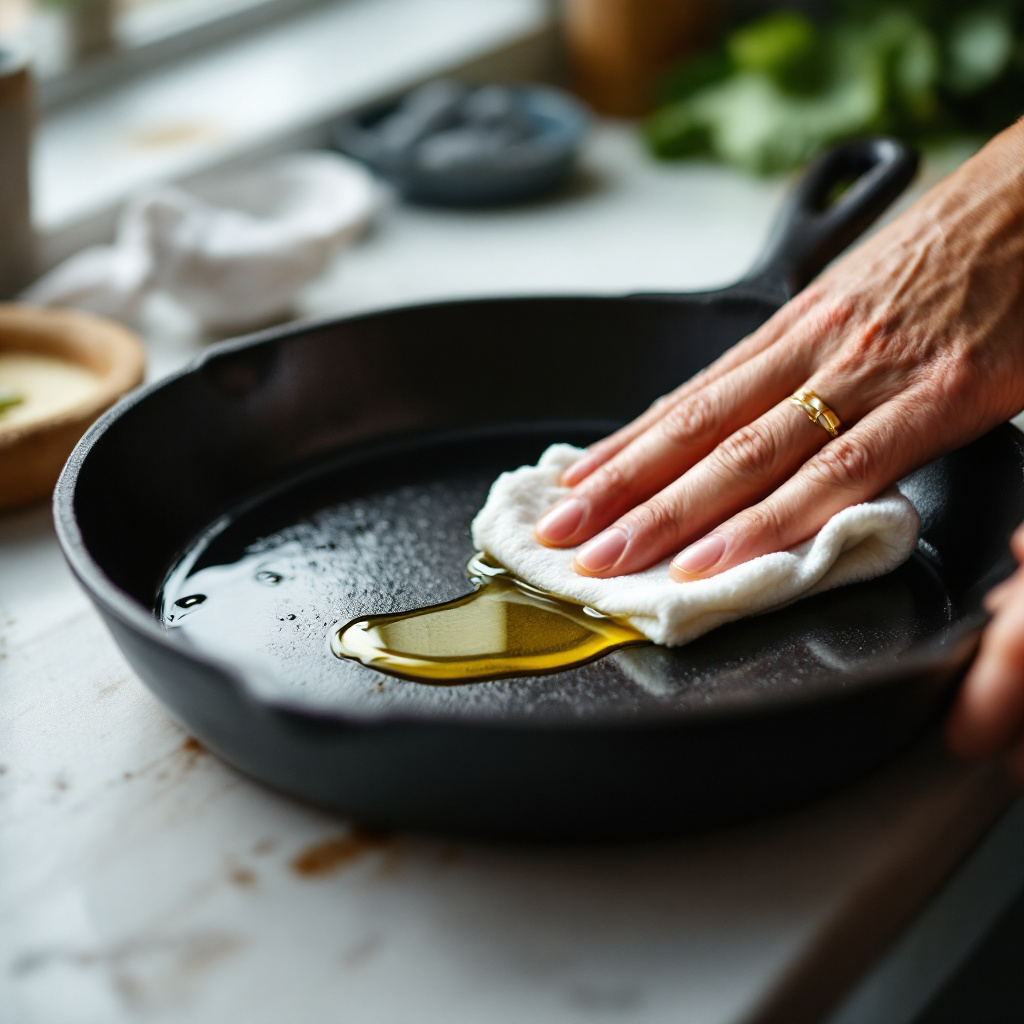
Add about a teaspoon of oil. Wipe it in aggressively. Then wipe it off even more aggressively. The pan should look dry, not glossy. This matters more than anything else. Seriously.
Step 3: Bake
Place the skillet upside down in the oven. Bake at 375–400 degrees for 45 minutes to one hour. Then let it cool inside the oven for at least 30 minutes. First layer done.
Step 4: Repeat Two More Times
Three thin layers give you a durable foundation without spending your entire day seasoning. Wondering how many layers of seasoning for cast iron are actually necessary? Three is the sweet spot. This builds a stable base without creating sticky buildup.
Secret tip: cooking in your pan regularly gets you to a perfectly nonstick surface faster than adding more seasoning layers ever will.
Why Food Sticks to Your Cast Iron Pan and How to Fix It
This is almost always the real question, isn’t it? People ask about seasoning because food keeps sticking. The truth is, seasoning is only part of the equation.
Common reasons food sticks:
• Not preheating long enough
• Cooking too lean (chicken breasts love to cling, they’re needy like that)
• Acid-heavy recipes that strip seasoning
• Brand-new seasoning that isn’t broken in yet
• Oil pooling instead of bonding
Ever yelled “why does food stick to my cast iron pan even when seasoned”? Join the club. I see this weekly in my classes. The fix is simpler than you’d think.
Try This Cooking Habit
Heat the skillet for at least two minutes. Add a tablespoon of oil. Wait until it shimmers. Then add food. Cast iron needs time to reach the right temperature, unlike your thin stainless pan. Once you learn the rhythm, the pan becomes nonstick through technique as much as seasoning.
Things might stick a little for the first few weeks. Totally normal. A well-seasoned pan builds personality with every meal.
Restore an Old Cast Iron Skillet’s Nonstick Surface This Weekend
Found a thrift store pan while hunting for vintage Pyrex? (Guilty as charged.) There’s a good chance it needs some love. Good news, though: restoring an old cast iron skillet’s nonstick surface is way easier than people think.
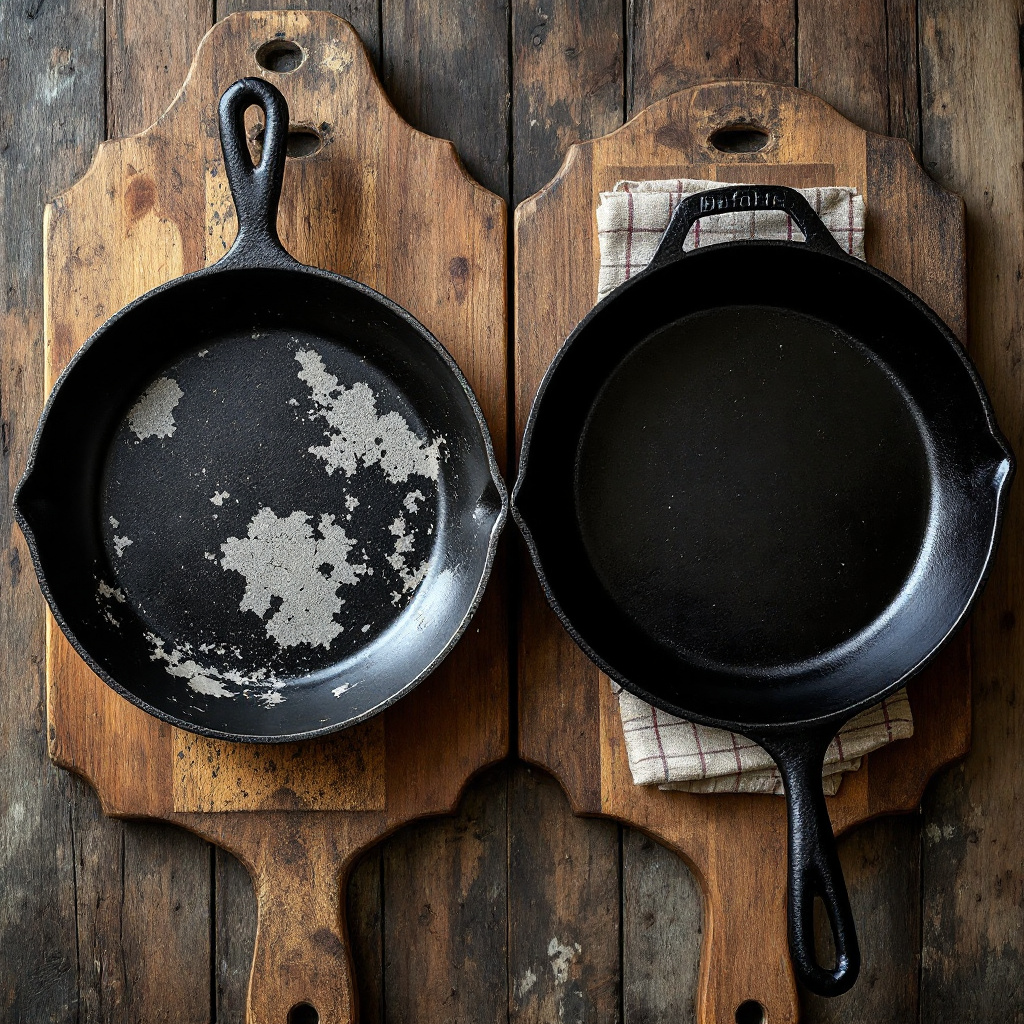
A reliable weekend workflow follows.
Step 1: Strip the Old Seasoning
Use oven cleaner, a lye bath, or just scrub with steel wool and hot water. Seasoning that flakes off usually signals too much oil applied in the past. Thick layers break apart under heat cycles.
Step 2: Dry Thoroughly
I’m repeating myself, but moisture is the enemy here.
Step 3: Follow the 3-Layer Method
Not five layers. Not ten. Keep applying layer after layer, and you’ll just recreate the sticky mess you stripped off.
Step 4: Cook Fatty Foods All Week
Bacon, sausage, fried potatoes: the good stuff. Build finish through use, not perfectionism. When someone asks how to season cast iron cookware so nothing sticks, this is the practical secret. Cooking creates the best finish.
Maintain Cast Iron Seasoning After Cooking: The 30-Second Habit
People worry way too much about long-term maintenance. No ritual required. No need to baby the pan.
The 30-second habit I teach in every community class:
• Rinse or wipe out the pan while it’s still warm
• Dry on low heat for a minute
• Add a teaspoon of oil
• Wipe it until the surface looks dry
That’s enough to maintain cast iron seasoning after cooking. This prevents problems like cast iron seasoning flaking off, those causes and fixes you’ll read about online. When the layers stay thin, nothing peels.
Does the pan feel tacky or sticky? That means there’s excess oil. Just heat it on the stove for five minutes to polymerize the residue.
Your quick action plan for a skillet that performs like a dream:
• Clean and dry your skillet completely
• Apply three ultra-thin layers of seasoning at 375–400 degrees
• Cook in it often, especially fatty foods
• Use the 30-second habit after meals
• Stop adding layers every time you panic
Hopefully you leave here with more confidence than confusion. Cast iron isn’t fragile. It doesn’t need perfection. Twelve layers of flaxseed oil? Completely unnecessary.
At some point, you just cook. The magic happens there.
For more kitchen fundamentals, check out [Link: topic to link] for deeper technique guides. Enjoy your skillet. It’ll probably outlive all of us.