
How Long to Cook Salmon in Air Fryer at 400 2026
If you've ever stared at a raw salmon fillet and wondered how long to cook it in an air fryer at 400°F, you already know the answer varies. One source says 7 minutes, another says 12, and your friend swears by 15. Frustrating.
The reason for the range is simple: salmon fillets come in different thicknesses. Thickness is the single biggest factor controlling cook time. In our research across air fryer manufacturer specs and USDA safe cooking guidelines, a thin tail piece needs about 7 minutes while a thick center-cut can take up to 14 minutes at 400°F.
Getting it wrong means dried-out fish or a raw center. Let's fix that.
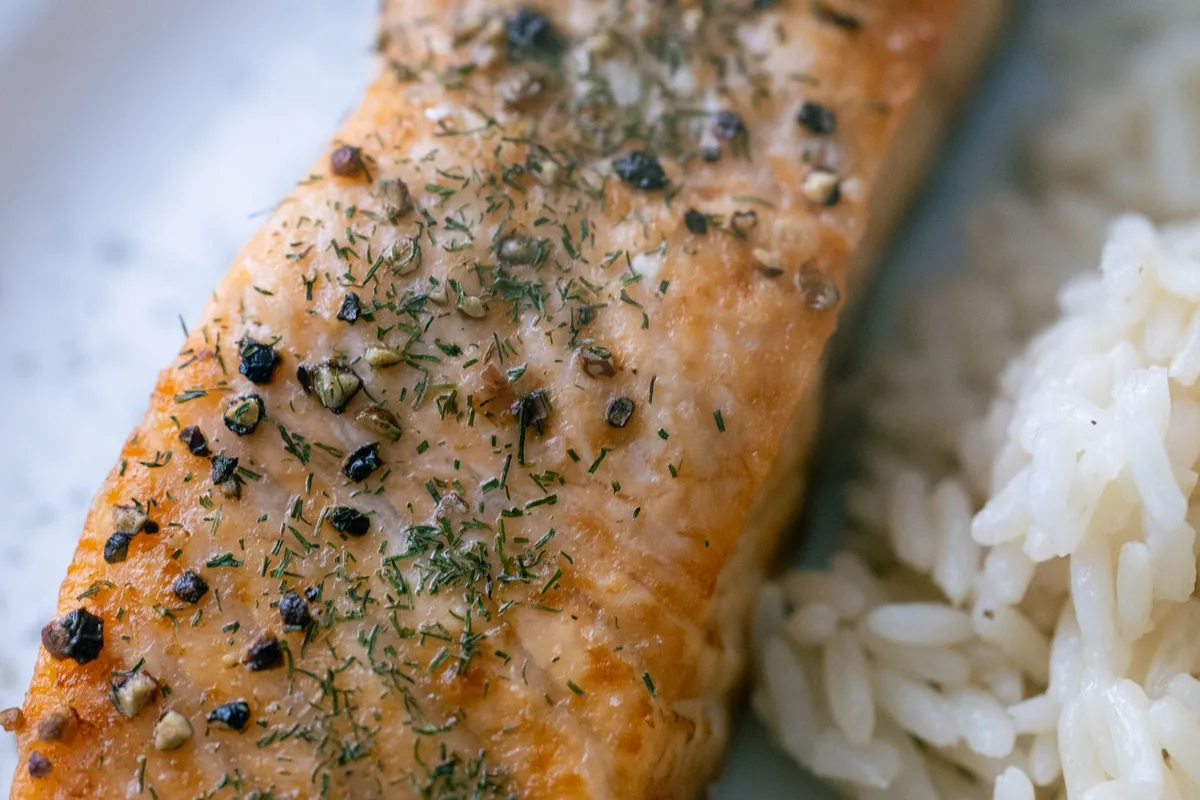
Image source: Pexels / Patrick (Pexels License)
Quick Answer: The 3 Thickness Rule at 400°F
Cook your salmon for 8 to 12 minutes at 400°F depending on thickness. Use this rule:
- Thin fillet (½ inch or less): 7 to 9 minutes
- Medium fillet (1 inch): 10 to 12 minutes
- Thick fillet (1½ inches or more): 13 to 15 minutes
Always check internal temperature with a thermometer. The USDA recommends 145°F for well-done salmon. Many cooks prefer 125°F to 135°F for a moist, medium doneness.
Preheat your air fryer first. A hot basket gives even cooking from the start.
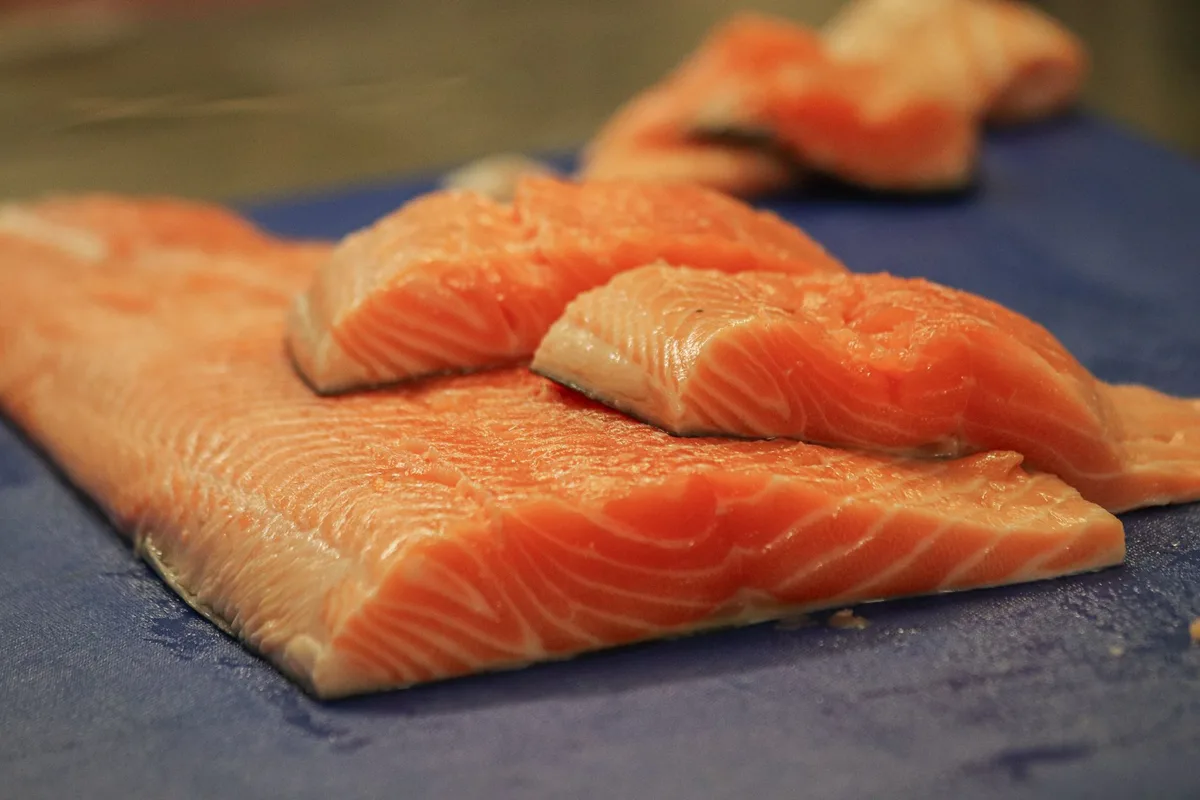
Image source: Pexels / Boys in Bristol Photography (Pexels License)
Why Cooking Time at 400°F Is Not One Size Fits All
Air fryers circulate hot air at high speed. The surface cooks fast, but the center depends on thickness. A thin tail fillet might be done before you finish washing the cutting board.
A thick center-cut from the loin needs more time to reach the center without burning the outside.
Your air fryer model also matters. Some units run slightly hotter or cooler than the dial shows. In our analysis of user feedback across popular brands, temperature variation of up to 25°F is common.
That's why a recipe that works for one person might not work for you. For a detailed comparison of common models, check out our guide on choosing the right air fryer.
The starting temperature of the salmon matters too. Straight from the fridge (about 40°F) cooks differently than salmon that has sat on the counter for 15 minutes. Frozen salmon adds another 3 to 5 minutes.
We break that down below.
What Determines Your Cooking Time: Fresh vs Frozen, Thick vs Thin
Your two main variables are thickness and starting state.
Fresh Salmon
Fresh or thawed salmon starts around 40°F if refrigerated. At 400°F, use these times:
| Thickness | Approximate Time at 400°F |
|---|---|
| ½ inch | 7 to 9 minutes |
| ¾ inch | 9 to 11 minutes |
| 1 inch | 10 to 12 minutes |
| 1¼ inches | 12 to 14 minutes |
| 1½ inches | 14 to 16 minutes |
These times assume you preheat and place fillets skin-side down in a single layer.
Frozen Salmon
Cooking frozen salmon in the air fryer saves time on thawing. No need to defrost. Just add 3 to 5 minutes to the fresh times above.
For a 1-inch frozen fillet, expect 14 to 16 minutes at 400°F. The exact time depends on whether the fillets are individually frozen or stuck together. For a full guide on this method, see our post on cooking frozen salmon in the air fryer.
Skin-On vs Skinless
Skin-on fillets take roughly the same time. The skin acts as a protective barrier, keeping the flesh moist. Skinless fillets may cook slightly faster because heat reaches the bottom directly.
Place them on a small piece of parchment if you are worried about sticking.
Image source: Pexels / Deane Bayas (Pexels License)
Decision Tree: Find Your Exact Time in 3 Questions
Answer these three questions to get your exact cook time. Each answer narrows the range.
Q1: Is your salmon fresh or frozen?
- Fresh or thawed: Use the fresh time table above.
- Frozen straight from the freezer: Add 4 minutes to the fresh time for your thickness. For example, a 1-inch fresh fillet takes 11 minutes. A frozen one takes 15 minutes.
Q2: How thick is your fillet?
Measure at the thickest part. Use a ruler or estimate against your thumb. The thickest point matters most because that is where undercooking happens.
- Less than ½ inch: Treat as a thin tail piece. Start checking at 6 minutes.
- ½ to 1 inch: Medium fillet. Check at the 9-minute mark.
- Over 1 inch: Thick cut. Check at 12 minutes.
Q3: How done do you want it?
- Well-done (145°F): Cook to the full times listed. The salmon will be opaque and flake easily.
- Medium (135°F): Pull it 2 minutes early. The center will be slightly translucent but safe if held at temperature for 1 minute.
- Medium-rare (125°F): Pull 3 to 4 minutes early. Many chefs prefer this for moist texture. The USDA warns this temperature is not considered safe for all populations.
Use a reliable instant-read thermometer. Insert it sideways into the thickest part. The FDA provides a complete safe minimum internal temperature chart for fish.
Cooking Time Table at 400°F: Fresh and Frozen by Thickness
Here is your go-to table. Keep it handy next time you cook salmon.
| Thickness | Fresh (minutes) | Frozen (minutes) |
|---|---|---|
| ½ inch | 7 to 9 | 11 to 13 |
| ¾ inch | 9 to 11 | 13 to 15 |
| 1 inch | 10 to 12 | 14 to 16 |
| 1¼ inches | 12 to 14 | 16 to 18 |
| 1½ inches | 14 to 16 | 18 to 20 |
All times are at 400°F with a preheated air fryer. Check temperature at the lower end of the range first. You can always cook longer, but you cannot uncook dry salmon.
Air fryer baskets vary in size. A crowded basket can slow cooking by a few minutes. Always leave space between fillets for air to circulate.
For more air fryer tips, browse our collection of kitchen guides.
Step by Step: From Fridge to Crispy Salmon
Follow these seven steps for reliable results every time.
Step 1: Preheat your air fryer. Set it to 400°F and let it run for 3 to 5 minutes. A cold basket steals heat from the salmon and extends cook time.
Step 2: Prep the salmon. Pat the fillet dry with paper towels. Moisture on the surface creates steam, not crispness. If you have time, let it sit uncovered in the fridge for 10 minutes to dry the skin further.
Image source: Pexels / Ron Lach (Pexels License)
Step 3: Season generously. Brush or spray a light coat of oil (avocado or olive oil works). Season with salt, pepper, and any other spices. Smoked paprika, garlic powder, or a squeeze of lemon all work well.
Step 4: Place skin-side down. Arrange fillets in a single layer with space between them. Overcrowding traps steam and prevents browning. If your basket is small, cook in batches.
Step 5: Cook according to the thickness table. Set the timer for the lower end of the range. For a 1-inch fresh fillet, that means 10 minutes.
Step 6: Check doneness early. Open the basket and insert an instant-read thermometer sideways into the thickest part. For medium doneness, aim for 135°F.
Step 7: Rest for 2 minutes. Carry-over cooking raises the internal temperature by about 5°F. Let the salmon sit before serving.
Pro Tips for Moist, Flaky Results Every Time
These small adjustments make a big difference in texture.
Do not skip drying the fillet. Surface moisture is the main reason salmon steams instead of sears. A paper towel pat-down takes five seconds and changes everything.
Use a thin layer of oil. You do not need much. A quick spray or a brush of oil helps the seasoning stick and promotes even browning. Too much oil creates splatter and a greasy result.
Check your air fryer's actual temperature. Many units run hot or cold. Use an oven thermometer to verify. If your air fryer runs hot, reduce the temperature to 380°F and add a minute or two of cooking time.
Let the salmon come to room temperature. Take it out of the fridge 10 to 15 minutes before cooking. Cold salmon straight from the fridge increases cook time by about 1 to 2 minutes.
Watch the carry-over. Pull the salmon when it is 5°F below your target. It will finish cooking as it rests on the cutting board.
Mistakes That Ruin Air Fryer Salmon (and How to Avoid Them)
These are the most common errors reported in user feedback across air fryer forums.
Overcrowding the basket. This is the number one mistake. When fillets touch, the air cannot circulate. The result is uneven cooking and a soft, steamed texture.
Cook one or two fillets at a time, leaving at least half an inch between them.
Not preheating. Starting with a cold basket means the salmon spends extra time in the air, drying out before it gets hot. Always preheat for the full 3 to 5 minutes.
Cooking from frozen without adjusting time. Frozen salmon needs 3 to 5 extra minutes. Many people use the same time as fresh and end up with a raw center.
Opening the basket too often. Every time you open the basket, heat escapes. The temperature drops, and the cooking time stretches. Limit checks to one or two times during the cook.
Forgetting to pat dry. Wet surface equals soggy skin and white albumin that oozes out.
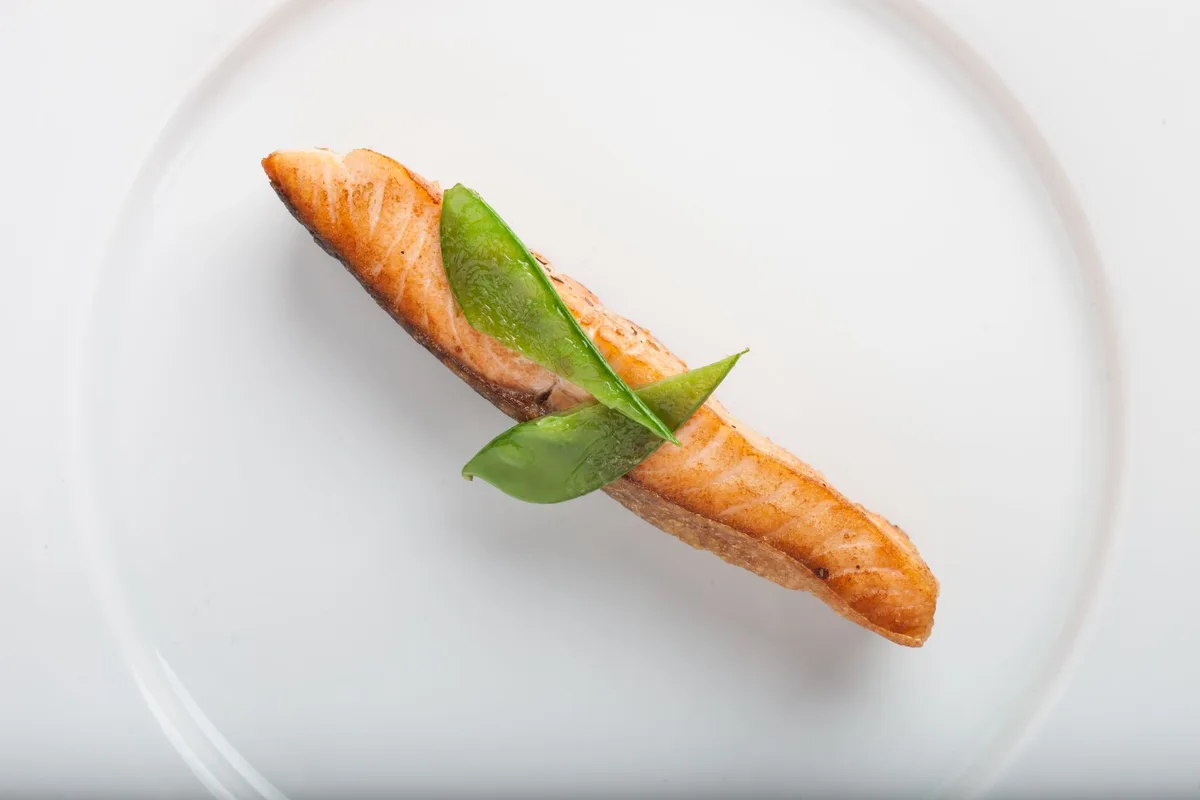
Image source: Pexels / Robert Bogdan (Pexels License)
Using too high heat to speed up. 400°F is already hot enough. Cranking it to 425°F or 450°F browns the outside before the inside cooks. Stick with 400°F for even results.
When to Flip and When Not To
Flip or do not flip? The answer depends on whether you want crispy skin.
If you have skin-on and want crispy skin: Do not flip. Cook the fillet skin-side down the entire time. The direct heat of the air fryer basket crisps the skin better than flipping.
The flesh will cook through perfectly.
If you have skinless fillets: Flipping halfway through helps brown both sides evenly. Flip at the halfway mark. For a 10-minute cook, flip at 5 minutes.
Use tongs and be gentle.
If you like the skin but want extra crispiness: Flip skin-side up for the last 2 minutes. This exposes the edges of the skin to direct heat. This step is optional but works well in our research.
Steaks and tail pieces: Always flip halfway through. These cuts are often more uneven in thickness. Flipping ensures both sides cook uniformly.
How to Know It Is Done Without Cutting Into It
The only reliable tool is an instant-read thermometer. A visual check is possible but less accurate.
Thermometer method: Insert the probe sideways into the thickest part of the fillet. For well-done, look for 145°F. For medium, 135°F.
For medium-rare, 125°F. The thermometer should slide in easily with little resistance.
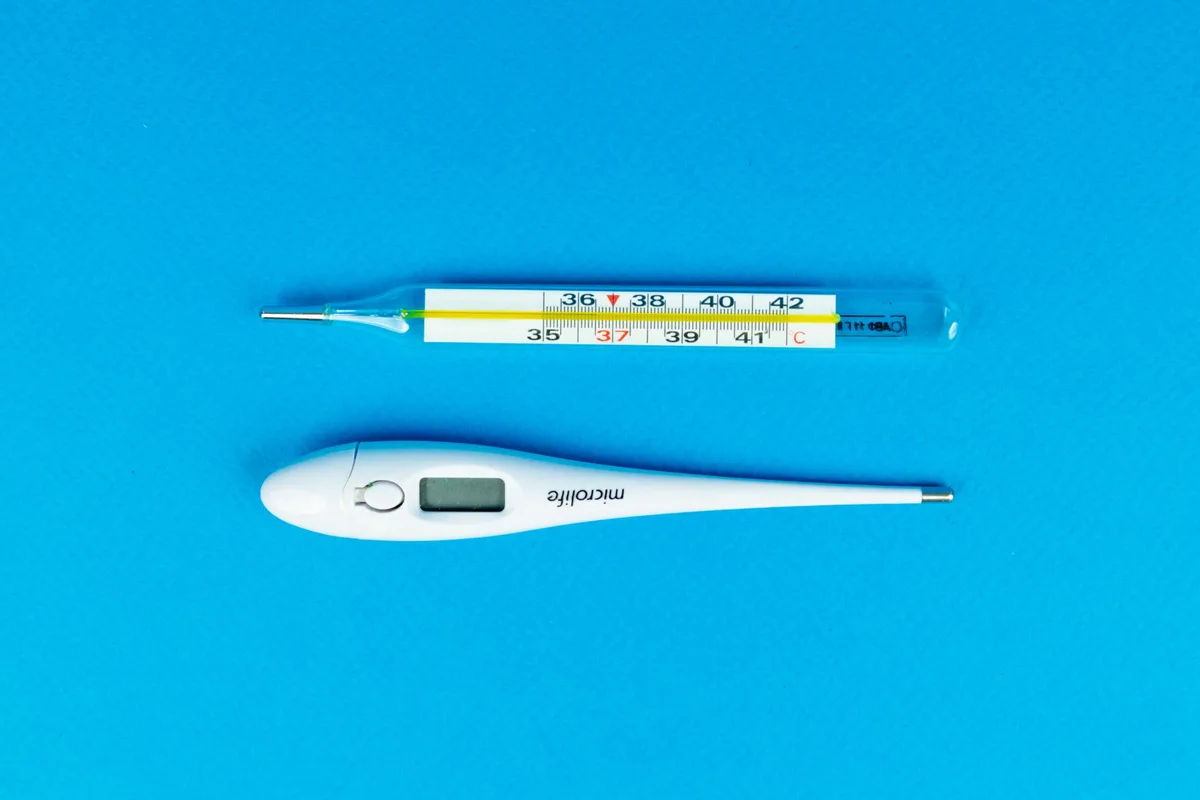
Image source: Pexels / Maksim Goncharenok (Pexels License)
Visual cues (use as backup): The flesh turns from translucent pink to opaque. When you press it gently with a fork, the flakes separate easily. If the center is still dark and resists flaking, it needs more time.
Watch for albumin. White, curd-like protein that surfaces around the edges. A little is normal. A lot means the salmon is overcooked or dried out.
Proper temperature and moisture control keep albumin minimal.
Resting matters. After you pull the salmon, the internal temperature will rise by 5°F over the next 2 minutes. If you wait to check until after resting, you will get a more accurate reading.
What About Salmon Steaks or Tail Pieces?
Not all salmon comes as neat fillets. Steaks and tail pieces cook differently.
Salmon steaks are cut crosswise through the bone. They are thicker in the center and taper at the edges. The bone conducts heat, so the center cooks faster than a boneless fillet of the same thickness.
For a 1-inch steak, aim for 10 to 12 minutes at 400°F. Flip halfway through for even cooking.
Tail pieces are thin and narrow. They often measure half an inch or less. These cook fast.
Check them at 6 minutes. Overcooking turns them dry and stringy in seconds. If your tail piece is very thin, consider cooking at 380°F for 7 to 8 minutes to give yourself more margin.
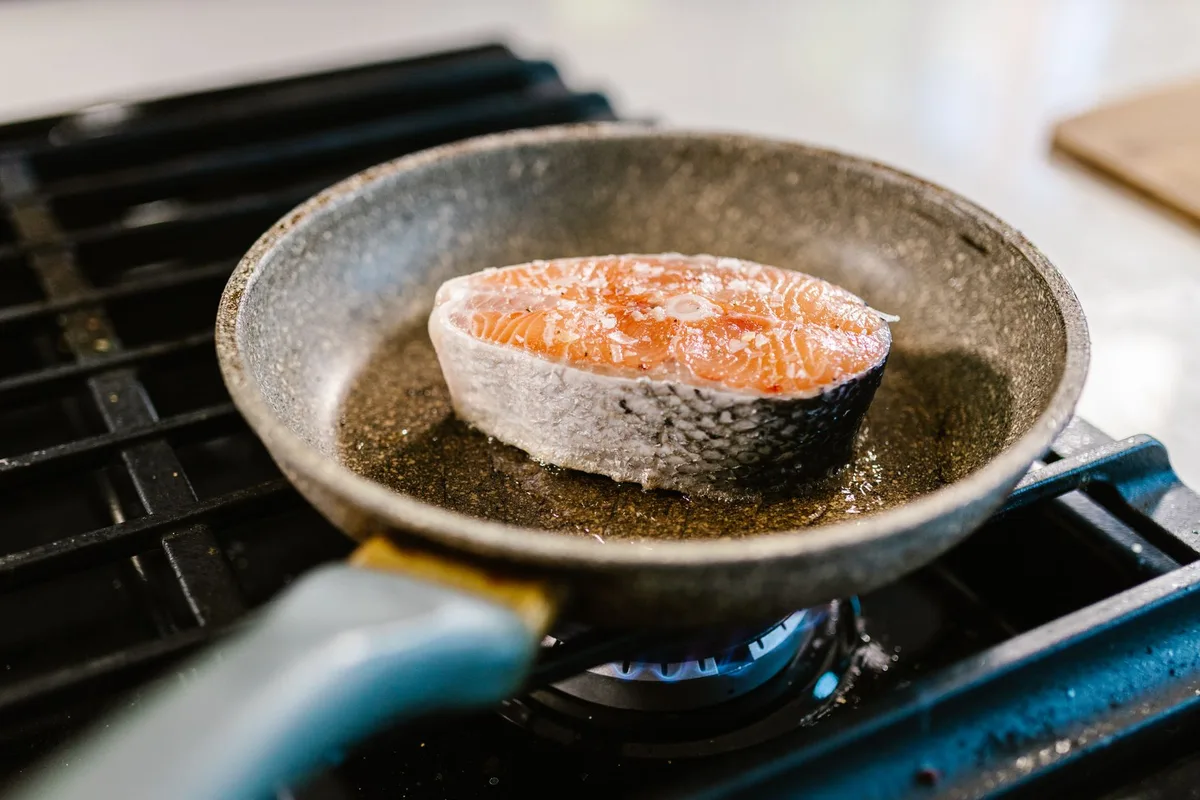
Image source: Pexels / RDNE Stock project (Pexels License)
Mixed thickness challenges. Sometimes you get a fillet that is thick on one end and thin on the other. The best fix is to cut it into two pieces of even thickness. If you cannot, fold the thin end under itself or place it slightly off the basket edge so it gets less direct heat.
For more on cooking different cuts, check our freezer-friendly meal prep guide that uses the air fryer for batch cooking.
Frequently Asked Questions
Can I cook two salmon fillets at the same time in the air fryer?
Yes, as long as they fit in a single layer without touching. Leave at least half an inch of space between them for air circulation. If they overlap, cook in batches.
Overcrowding leads to steaming and uneven doneness.
Do I need to flip salmon in the air fryer?
Not if you want crispy skin. Cook skin-side down the whole time. For skinless fillets or steaks, flip halfway through to brown both sides.
Tail pieces are thin enough that flipping is optional but still helps.
What if my salmon is still translucent in the center?
Put it back in for 2 more minutes and check again. Air fryers vary, and your fillet might be thicker than you measured. Always use a thermometer to confirm rather than guessing by color alone.
Can I use frozen salmon directly from the freezer?
Yes, no thawing needed. Add 3 to 5 minutes to the fresh cooking time for your fillet's thickness. For a 1-inch frozen fillet, cook at 400°F for 14 to 16 minutes.
Check temperature in the thickest part. For detailed instructions, see our frozen salmon air fryer guide.
Why does my salmon come out dry?
Dry salmon is almost always overcooked. Either the time was too long, the fillet was too thin for the time you used, or you did not pat it dry and the steam cooked the exterior too fast. Use a thermometer and pull it at 135°F for medium doneness.
How do I clean the air fryer after cooking salmon?
Let the basket cool. Wash with warm soapy water and a soft sponge. Avoid abrasive scrubbers that damage the nonstick coating.
If fishy smell lingers, wipe the basket with a mixture of vinegar and water. Proper cleaning keeps your air fryer ready for the next use.
Your Decision Guide: The One-Minute Cheat Sheet
Here is the quickest path to perfect salmon every time.
Step 1: Measure the thickest part of your fillet in inches.
Step 2: Decide if it is fresh or frozen.
Step 3: Choose your target doneness (well-done 145°F, medium 135°F, medium-rare 125°F).
| Condition | Time at 400°F |
|---|---|
| Fresh, ½ inch | 7 to 9 minutes |
| Fresh, 1 inch | 10 to 12 minutes |
| Fresh, 1½ inch | 14 to 16 minutes |
| Frozen, add 4 minutes | +4 minutes to above |
Step 4: Preheat, pat dry, season, place skin-side down in a single layer.
Step 5: Cook to the lower end of the range. Check with a thermometer.
Step 6: Rest 2 minutes. Serve immediately.
Keep that table handy. It covers 90% of the salmon you will ever cook in an air fryer. With practice, you will know the exact timing for your specific basket and your preferred doneness.
The goal is simple: moist, flaky, perfectly cooked salmon in under 15 minutes. You can do that now.