How to Cook Frozen Sausage in Air Fryer 2026
Cook frozen sausage in an air fryer at 380°F for 10 to 14 minutes. Flip halfway through. Always use a meat thermometer.
Breakfast links take 8 to 10 minutes. Thick Italian sausages take 12 to 15 minutes. Internal temp must reach 160°F for pork or beef.
Poultry sausages need 165°F.
Why Cooking Frozen Sausage in an Air Fryer is Different from Thawed
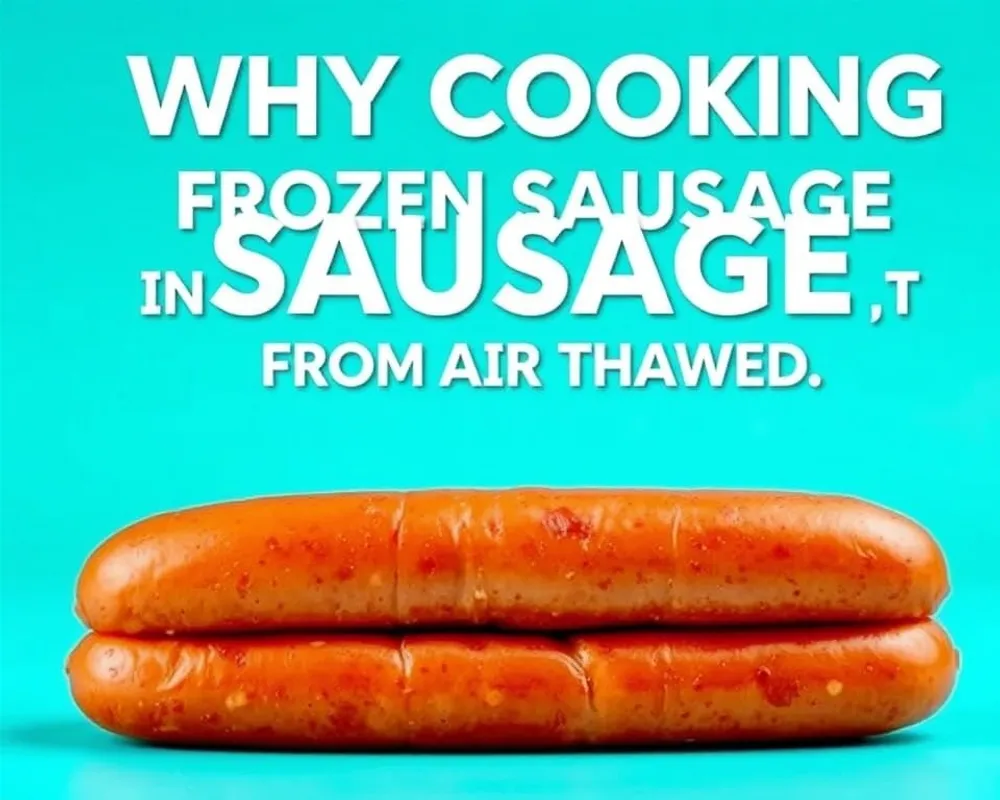
Frozen sausage starts with ice crystals inside the meat. Those crystals melt during cooking and create steam. Steam helps keep the interior moist if you manage the temperature correctly.
Thawed sausage cooks more evenly because heat penetrates at a consistent rate. Frozen sausage has a cold core that takes longer to reach safe temperature. That's why cooking straight from frozen demands a lower, longer heat.
Most air fryer manuals recommend reducing the cook temperature by about 20°F when cooking from frozen.
The airflow in an air fryer behaves differently with frozen sausage. The cold surface slows initial browning. You need a slightly longer cook time to develop that golden crust.
But once the surface dries, the air fryer's convection does a fantastic job of crisping the casing without drying out the meat. The same approach works when you cook frozen chicken breast in an air fryer or handle frozen salmon. Just adjust for the shape and density.
The Two Big Risks: Undercooking and Drying Out
Two things can go wrong. Let's name them so you can avoid both.
Risk one: undercooking. Frozen sausages look deceptive. The outside can be deeply browned while the inside stays cold and raw. This is the most common complaint across all major air fryer brands.
Never trust color alone. Use a thermometer every single time.
Risk two: drying out. Because frozen sausages take longer to cook, the outer casing can dry out before the center reaches safe temperature. This happens most often when you set the air fryer too hot. 400°F or above chars the outside while the inside lags behind.
The sweet spot is 380°F. That's warm enough to crisp the casing and generate good browning, but low enough to let the heat travel inward without burning the surface. If your model runs hot, drop to 360°F and add a couple of minutes.
Overcrowding the basket also causes drying. When sausages touch, air can't circulate properly. The parts that touch stay pale and soft, so you cook longer to even things out, and that dries out the exposed parts.
Single layer only. Leave space between each link.
Core Safety Facts: Internal Temperatures You Must Reach
This is not a suggestion. It's a food safety standard from the USDA. The USDA Food Safety and Inspection Service sets the following minimum internal temperatures for sausages:
| Sausage Type | Safe Minimum Internal Temp | Cook Time at 380°F (frozen) |
|---|---|---|
| Pork or beef (raw) | 160°F | 12–15 minutes |
| Chicken or turkey (raw) | 165°F | 10–13 minutes |
| Pre-cooked (any meat) | 140°F (reheat temp) | 6–8 minutes |
The most important tool is an instant-read thermometer. Insert it into the thickest part of the sausage, avoiding the casing. Wait about 3 seconds.
If it's below the target, put the sausage back in for 2 more minutes and check again.
Pre-cooked frozen sausages are a different category. They're already safe to eat cold. The goal is browning and warming to 140°F.
They cook faster and are harder to dry out. Check the package. If it says "fully cooked," treat it as a reheat job.
What You'll Need: Equipment and Tools for Success

You probably already own everything. Here's the short list:
- An air fryer. Basket-style or oven-style both work. Basket models tend to cook more evenly because the food sits directly in the airflow.
- A meat thermometer. Digital instant-read is best. Don't rely on the pop-up thermometers in some store-bought sausages.
- Tongs. For flipping halfway. A fork pierces the casing and lets juices escape.
- Cooking spray (optional). Most frozen sausages have enough fat. For extra-crispy casing, a light spritz of avocado or canola oil helps.
- Paper towels. For patting sausages dry before cooking and for draining after.
- A clean air fryer basket. Leftover grease from previous cooks can create smoke at high temperatures. If you've had issues with smoking, check our guide on how to clean air fryer heating element properly.
Step-by-Step Guide: How to Cook Frozen Sausage in an Air Fryer
Step 1: Preheat Your Air Fryer (Or Not?)
Preheating gives you a more consistent cook. Most basket-style air fryers heat up in 3 to 5 minutes at 380°F. Use the preheat button if your model has one.
But some budget air fryers run hotter than their display says. In that case, preheating can overshoot the surface temp and burn the casing before the center thaws. If you've noticed dark outsides and cold centers, skip the preheat.
Just add 2 minutes to the total cook time.
Step 2: Arrange Sausages in the Basket
Place sausages in a single layer. Leave at least half an inch between each link. For breakfast links, you can fit about 8 to 10 in a 5-quart basket.
For thick Italian sausages, 4 to 5 is the max. Cook in batches if needed. Overcrowding drops the temperature inside the basket and steams the meat instead of crisping it.
Step 3: Set Temperature and Time
Set the air fryer to 380°F. For breakfast links (thin, pre-cooked), cook 8 to 10 minutes. For raw pork or beef sausages, cook 12 to 15 minutes.
For raw chicken or turkey sausage, cook 10 to 13 minutes. For pre-cooked bratwurst or kielbasa, drop to 6 to 8 minutes at 370°F.
Step 4: Flip Halfway Through
At the halfway mark, pull the basket out. Use tongs to flip each sausage. This ensures even browning on both sides.
If you skip this step, the bottom side stays pale and soft. Set a timer so you don't forget.
Step 5: Check Internal Temperature
This is the most important step. Insert the probe into the thickest end of the sausage. Wait 3 seconds.
It must read 160°F for pork or beef, 165°F for poultry. If it's below, put them back in for 2 minutes and check again. Repeat until safe.
Step 6: Rest and Serve
Let the sausages rest for 1 to 2 minutes. Carryover cooking will raise the internal temp by about 5°F. If you notice greasy pooling, pat them with a paper towel.
Serve immediately.
Exact Times and Temps by Sausage Type
| Sausage Type | Raw or Pre-cooked | Temp (°F) | Time (min) | Flip Time |
|---|---|---|---|---|
| Breakfast links | Pre-cooked | 380 | 8–10 | 4–5 min |
| Breakfast patties | Pre-cooked | 380 | 7–9 | 4 min |
| Italian sausage (raw) | Raw | 380 | 12–15 | 6–7 min |
| Bratwurst (raw) | Raw | 380 | 13–16 | 7–8 min |
| Bratwurst (pre-cooked) | Pre-cooked | 370 | 6–8 | 3–4 min |
| Chicken sausage (raw) | Raw | 380 | 10–13 | 5–6 min |
| Turkey sausage (raw) | Raw | 380 | 10–12 | 5–6 min |
| Kielbasa (pre-cooked) | Pre-cooked | 370 | 6–8 | 3–4 min |
| Andouille (pre-cooked) | Pre-cooked | 370 | 7–9 | 4 min |
These times assume a single layer and a preheated air fryer. If your basket is full or your model runs cool, add 1 to 2 minutes. Always verify with a thermometer.
Common Mistakes to Avoid
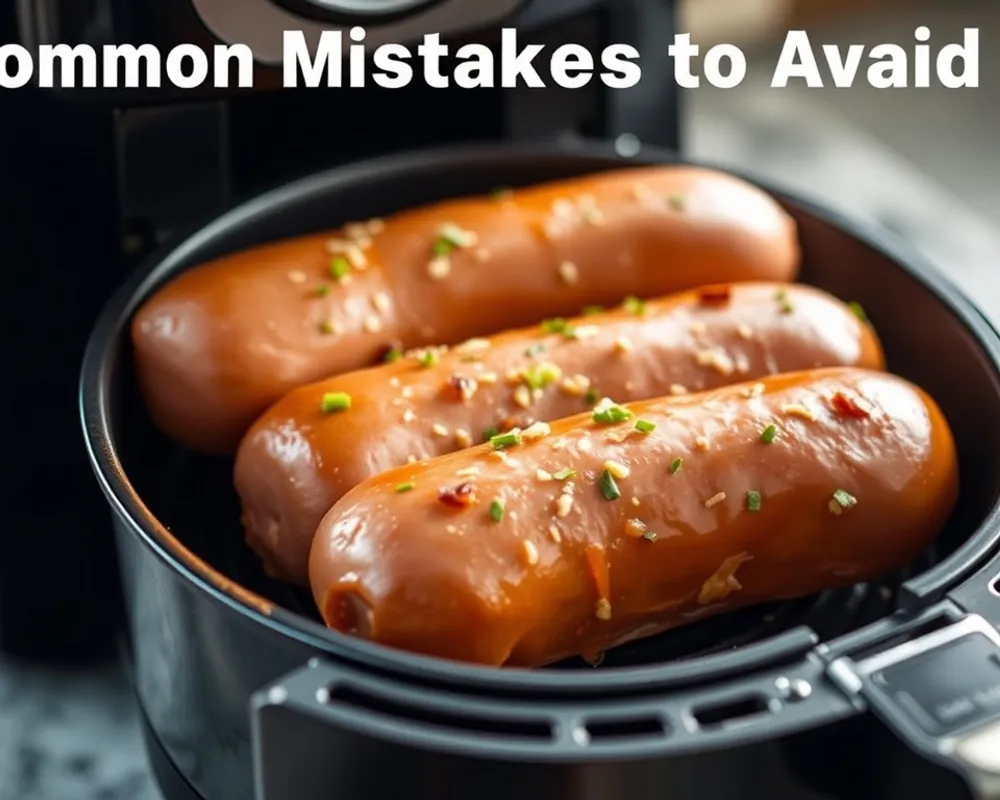
Setting the temp above 400°F. The outside burns. The inside stays raw. Stick to 380°F.
Not flipping halfway. One side gets pale. The other gets too dark. Set a phone reminder.
Cooking without patting dry. Ice crystals create steam pockets. Steam prevents browning. Pat each sausage with a paper towel first.
Overcrowding the basket. Sausages steam instead of crisp. Cook in batches. It takes 10 extra minutes for a second batch, but the texture is worth it.
Trusting the timer over a thermometer. Times vary by air fryer brand and model. Always temp check.
How to Tell When It's Done Without a Thermometer
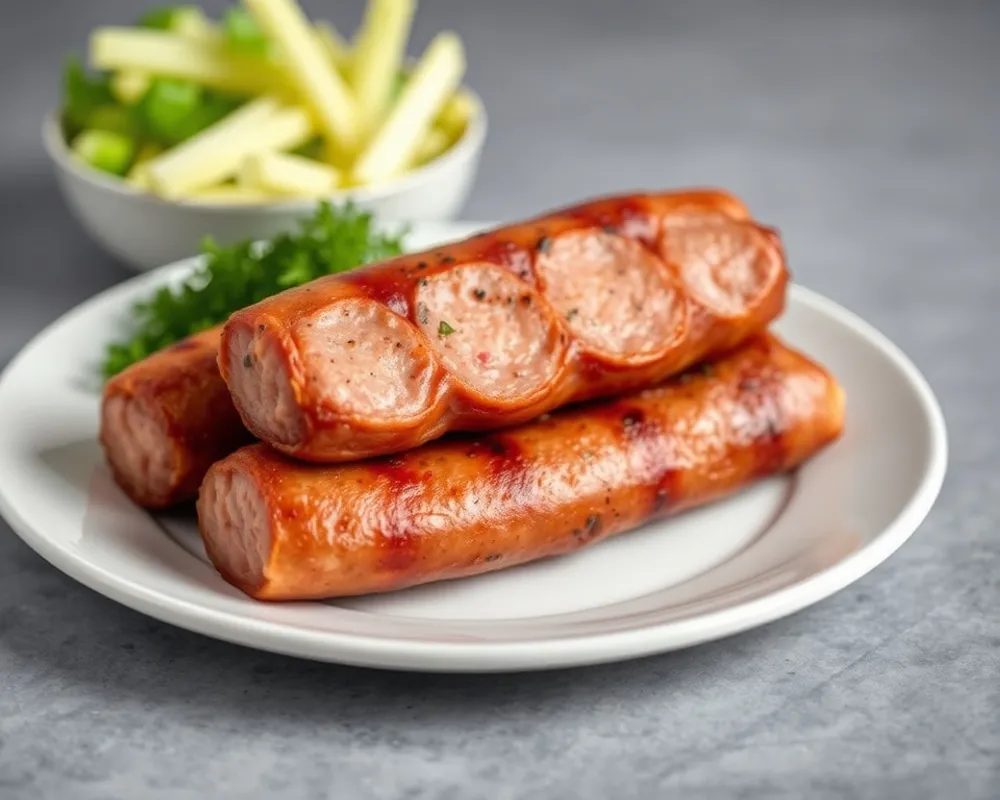
A properly cooked sausage is uniformly brown all over. No pale spots. The casing looks slightly wrinkled and tight.
When you press it with a fork, it feels firm with a little spring, not squishy.
For raw sausages, cut one open at the thickest part. The center should be fully opaque with no pink areas. The juices should run clear.
If you see any pink, it needs more time.
Visual checks fail sometimes. Sausages can look done on the outside and still be undercooked inside. That's why a thermometer is the best investment for consistent results.
Can You Cook Different Kinds Together?
Not really. Different sausage types have different cook times and safe temperatures. Cooking them together means one batch is overdone or underdone.
If you must cook mixed sausages, group them by thickness. Put breakfast links and pre-cooked bratwurst in separate batches. Or cook them together but check the thinner ones early and remove them.
Raw and pre-cooked sausages should never be cooked together. Raw needs 160°F or 165°F. Pre-cooked only needs 140°F.
Storing and Reheating Leftover Air-Fried Sausage
Let leftover sausage cool completely before storing. Place it in an airtight container or zip-top bag. It stays good in the refrigerator for 3 to 4 days.
For longer storage, freeze the cooked sausages. Wrap each one individually, then put them in a freezer bag. They'll keep for up to 3 months.
Reheat in the air fryer at 350°F for 3 to 4 minutes for refrigerated sausages, or 5 to 6 minutes for frozen ones. Flip halfway. Check the internal temp after reheating.
It should reach 165°F for best food safety.
Frequently Asked Questions
Can I cook frozen sausage in an air fryer without preheating?
Yes. Skipping the preheat adds about 2 minutes to the total cook time. Budget air fryers often perform better without preheating because they won't overshoot the surface temperature.
How do I keep frozen sausage from sticking to the basket?
Spray the basket lightly with cooking oil before adding the sausages. Use avocado or canola oil for a high smoke point. Avoid non-stick sprays with added flour or lecithin, which can leave a sticky residue.
Can I cook frozen sausage patties in an air fryer?
Yes. Place them in a single layer. Cook at 380°F for 7 to 9 minutes, flipping halfway.
Check internal temp at 160°F for pork or 165°F for poultry. Patties are thinner, so they cook faster than links.
Why does my air fryer smoke when cooking frozen sausage?
Smoke usually comes from grease dripping onto the heating element. Pat the sausages dry before cooking. Also make sure your air fryer basket and heating element are clean.
A dirty element from previous cooks can cause smoking.
Can I cook frozen sausage in an air fryer liner or parchment paper?
Yes, but use perforated parchment paper designed for air fryers. Solid paper blocks airflow. Place the paper in the basket, add the sausages on top, and cook as normal.
Final Verdict: Is the Air Fryer the Best Method for Frozen Sausage?
The air fryer is the best method for cooking frozen sausage when speed and texture matter. It beats the oven, which takes 20 to 25 minutes and uses more energy. It beats the stovetop, which requires constant attention and leaves splatter everywhere.
It definitely beats the microwave, which turns sausage into a rubbery version of itself.
For a single serving or a family of four, the air fryer wins every time. The combination of fast cook time, crispy casing, and easy cleanup makes it the go-to for frozen sausage. If you're cooking for a large crowd, the oven handles more sausages at once.
For everyday cooking, the air fryer is the clear choice.
Remember the golden rules. Use a meat thermometer. Don't overcrowd.
Flip halfway. Stick to 380°F. Do that, and you'll have perfectly cooked frozen sausage in under 15 minutes.