Guide to Air Fryer Not Heating up in 2026 (Simple Steps)
Short Introduction
You preheat, load the basket, set the timer, and then… nothing. Cold air. No sizzle.
An air fryer that won’t heat up is frustrating, especially when dinner’s on the line. I’ve been there more times than I’d like to admit, and after helping dozens of friends troubleshoot their dead units, I’ve learned the most common reasons this happens. Most fixes take just a few minutes and don’t require a repairman.
Let’s get your air fryer roaring hot again.
Table of Contents
- Common Causes of an Air Fryer Not Heating Up
- Check the Power Supply First
- Faulty Thermostat or Temperature Sensor
- Blown Thermal Fuse
- Broken Heating Element
- Control Board or Display Issues
- Overheating Protection Mode
- When to Call a Professional
- Safety Tips for Troubleshooting
- Cleaning & Maintenance to Prevent Future Issues
- FAQ
- Final Verdict
- Key Takeaways
Common Causes of an Air Fryer Not Heating Up

An air fryer that powers on but never gets hot usually points to one of these six culprits: a bad power connection, a tripped thermal fuse, a stuck thermostat, a burned-out heating element, a control board glitch, or accidental overheating protection. Each is fixable at home more often than you think.
Featured Snippet Answer:
The most common reasons an air fryer won’t heat up are a faulty power cord, a blown thermal fuse, a broken heating element, a defective thermostat, or the unit entering overheating protection mode after being run empty.
Check the Power Supply First
Before you take anything apart, rule out the obvious. I’ve wasted hours on a unit that just needed a firmly plugged cord.
- Make sure the outlet works. Plug in a phone charger or lamp to verify.
- Check the power cord for cuts, kinks, or burn marks. A frayed cord can interrupt voltage.
- If your air fryer has a removable cord (some models do), reseat it firmly on both ends.
- Try a different outlet in a different room. Circuit breakers can trip without a visible pop.
If the unit lights up but the fan runs cold, move on to the next step. Power alone isn’t heat.
Faulty Thermostat or Temperature Sensor
Your air fryer relies on a thermostat to tell the heating element when to cycle on and off. When that sensor fails, the element stays off, even though the display says 400°F.
Signs of a faulty thermostat:
- The fan runs, the light is on, but no heat after five minutes.
- The temperature reads wildly wrong (e.g., showing 350°F when the chamber is cool).
- The unit overheats and shuts down repeatedly.
What you can do:
Unplug the air fryer and let it cool completely. Locate the thermostat probe (usually a small metal cylinder near the heating element). Use a multimeter to check continuity.
No continuity means a dead thermostat. Replacement thermostats are cheap and available online, but you’ll need a screwdriver and basic soldering skills. If that sounds like too much, skip to the professional repair section.
Blown Thermal Fuse
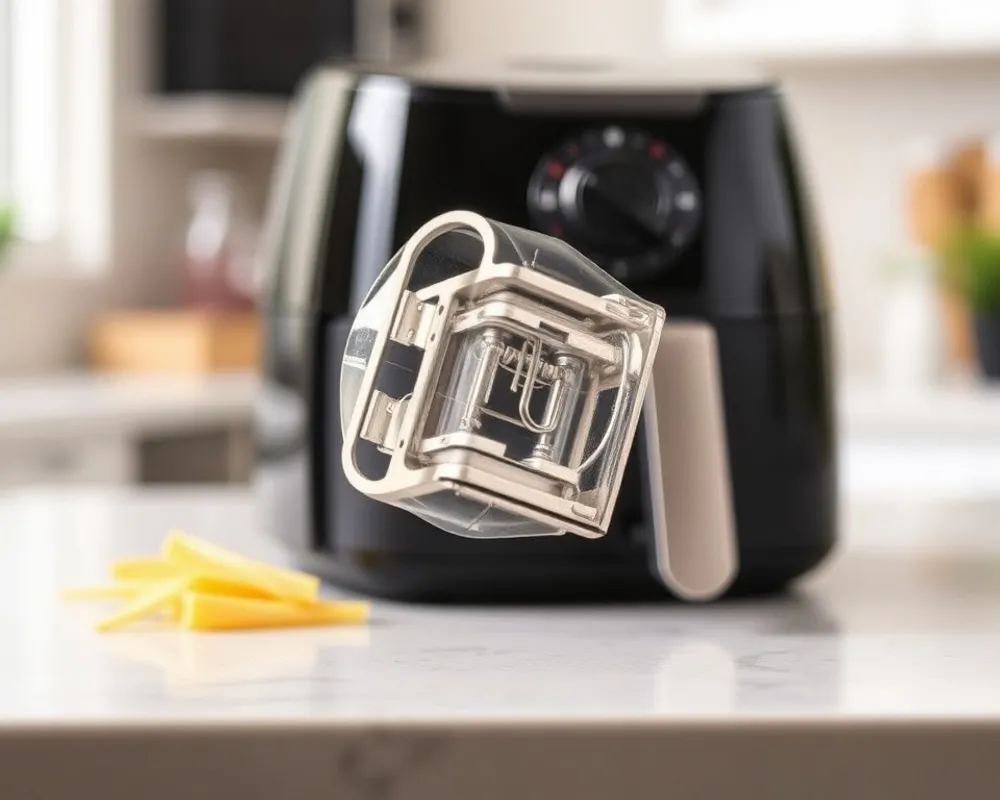
The thermal fuse is a one-time safety device that cuts power to the heating element if the air fryer gets dangerously hot. It’s a cheap, dime-sized component, but when it blows, your air fryer becomes a cold box.
How to test it:
- Unplug and open the back panel (often held by four Phillips screws).
- Locate the two wires leading to a small white or black cylinder, that’s the thermal fuse.
- Set your multimeter to continuity mode. Touch the probes to the fuse’s terminals. No beep? It’s blown.
Replacing a thermal fuse costs about $5 and takes fifteen minutes. Order the same rating (usually 240°F or 302°F) from an appliance parts site. Solder it in, or use crimp connectors if you’re not confident with a soldering iron.
Why it blows:
- Running the air fryer while the basket is too full, blocking airflow.
- A buildup of grease or food debris inside the heating compartment.
- Using the unit without the basket fully inserted.
Broken Heating Element
When the element itself cracks, breaks, or shorts out, no heat can be produced. This is less common than a fuse or thermostat failure, but it happens, especially in older units or those that saw heavy daily use.
Testing the element:
- Visually inspect the coil through the top grate. Look for cracks, black burn marks, or a section that’s completely broken off.
- Use a multimeter on the ohms setting. A healthy element reads around 10-30 ohms. Infinite resistance means it’s open.
If the element is bad, you have two options: order a replacement part (check your air fryer’s model number on the bottom sticker) or buy a new air fryer. Elements are usually easy to swap, remove a couple of screws, slide the old one out, slide the new one in. But if your model is more than three years old, a replacement unit often makes more financial sense.
Control Board or Display Issues
Sometimes the control board loses its mind. The buttons work, the timer counts down, but the board never sends the “heat on” signal. This can happen after a power surge, a spilled liquid inside the panel, or a simple software glitch.
Quick fix to try:
- Unplug the air fryer for 10 minutes. This resets the control board. Plug it back in and test.
- If that doesn’t work, look for visible burn marks or bulging capacitors on the circuit board.
- For moisture damage, let the unit dry out for 24 hours in a warm, dry place.
A failed control board often means the end of the road unless you’re comfortable with electronics repair. Replacement boards are hard to find for many brands.
Overheating Protection Mode
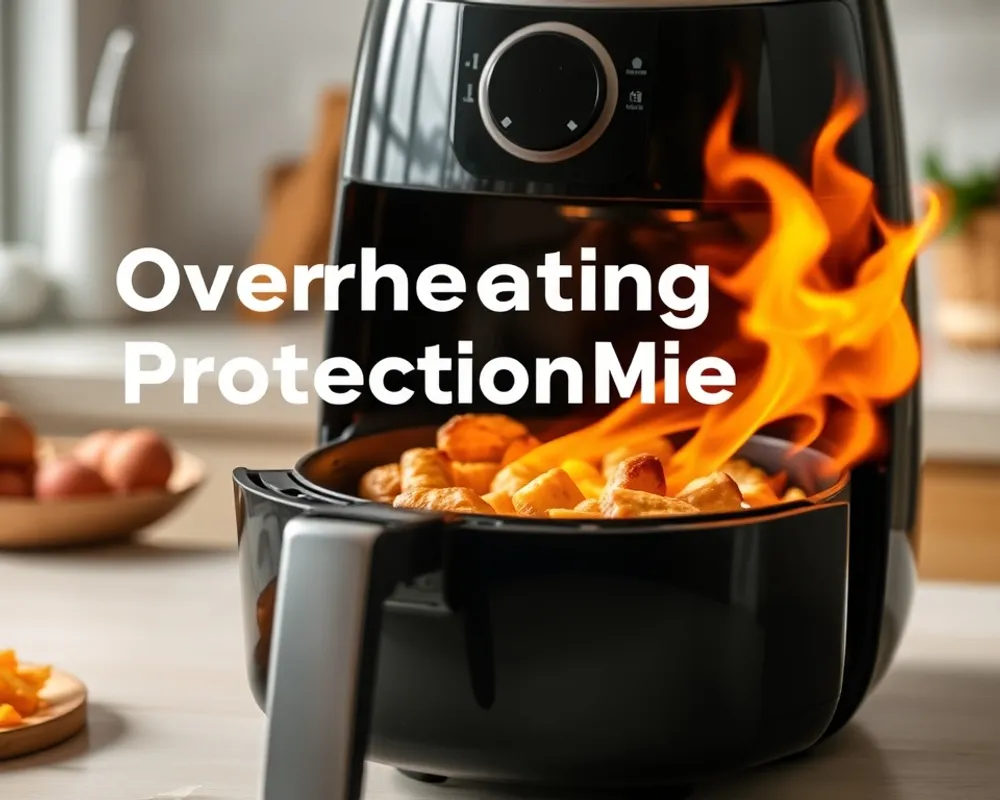
Your air fryer has a built-in safety feature: if it gets too hot (often from running empty or with a badly clogged vent), a thermal switch trips and disables the heating element until the unit cools down.
How to reset it:
- Unplug the air fryer.
- Let it sit for 30, 60 minutes. The internal temperature must drop well below the trip point.
- Plug it back in and run a test at 350°F for 5 minutes.
If it works again, the cause was simply overheating. To prevent a repeat, never run an empty air fryer, keep the vents clear, and avoid overfilling the basket. Regular cleaning also helps, a greasy interior traps heat and triggers the safety switch.
When to Call a Professional
If you’ve checked the fuse, the element, the thermostat, and the control board, and it still won’t heat, it’s time to weigh cost vs. value. Professional repair for an air fryer typically runs $50, $100. Most units cost between $60 and $200 new.
Unless you have a high-end model (like a Philips or Breville), replacing it is often cheaper.
When repair makes sense:
- Your air fryer is a premium model over $150.
- The problem is a simple fuse or thermostat, and you can do it yourself.
- The unit is under warranty. Check with the manufacturer first.
Safety Tips for Troubleshooting
- Always unplug before opening the casing. Capacitors can hold a charge, but the risk is low in small appliances. Still, don’t touch bare wires with the cord plugged in.
- Never use water or spray cleaners inside the heating chamber. Let components dry fully before reassembling.
- Watch for sharp edges. Air fryer interiors are sheet metal. Wear gloves if you’re not used to handling small electronics.
- If you smell burning plastic or see sparks, stop immediately. That’s a short circuit, not a simple fix.
Cleaning & Maintenance to Prevent Future Issues
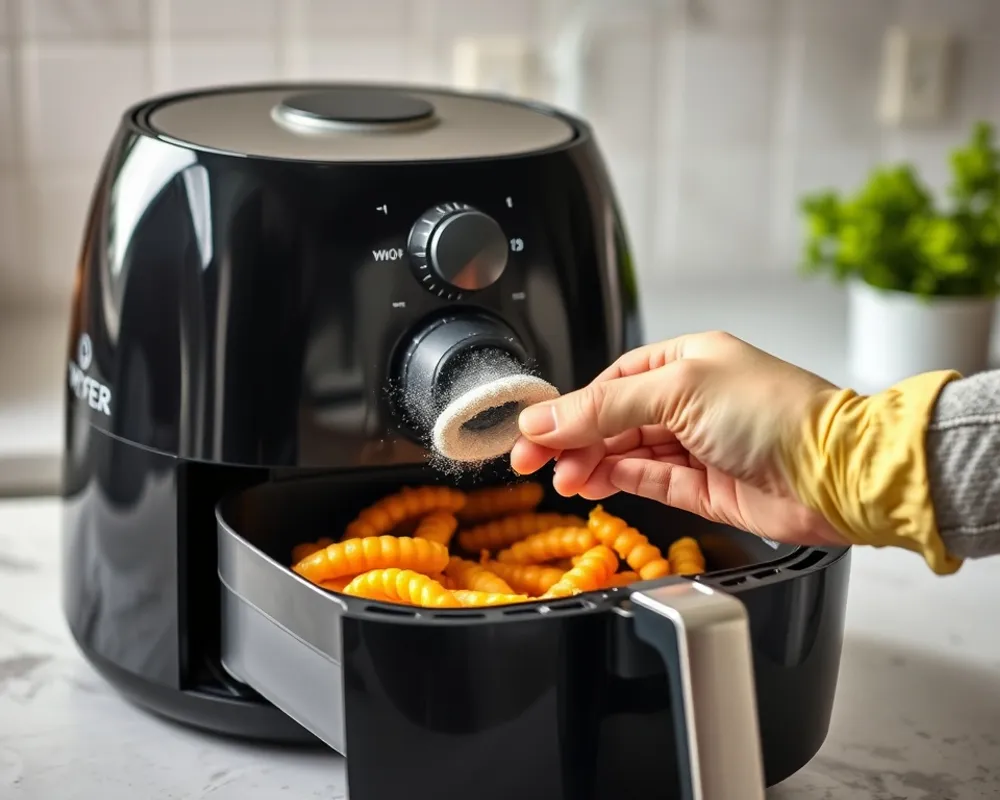
A dirty air fryer doesn’t just cause smoking, it can also cause heating problems. Grease buildup on the heating element insulates it, making it overheat and trip the fuse. Food crumbs lodged in the fan duct block airflow, confusing the thermostat.
Weekly cleaning routine:
- Remove and wash the basket and tray in hot soapy water (dishwasher safe for most models).
- Wipe the interior with a damp microfiber cloth. Don’t submerge the main unit.
- Clean the heating element coil gently with a soft brush or dry toothbrush. You’ll be surprised how much gunk comes off.
Monthly deep clean:
- Pull off the back panel (if screws are accessible) and vacuum out any dust or debris near the fan.
- Check the thermal fuse and wiring for signs of corrosion or grease.
Keeping your air fryer clean directly reduces the chance of a blown thermal fuse or thermostat failure. Think of it as preventive medicine.
FAQ
1. Why does my air fryer turn on but not heat up?
Most often it’s a blown thermal fuse, a failed thermostat, or the unit being stuck in overheating protection mode. Check the fuse first, it’s the cheapest fix.
2. Can a dirty air fryer cause it not to heat?
Yes. Excess grease on the heating element can cause the thermal fuse to blow, or block airflow enough to fool the thermostat into thinking it’s already hot.
3. How do I reset my air fryer after overheating?
Unplug it and let it cool completely for 30, 60 minutes. Plug it back in and run a short test cycle. If it heats again, the problem was temporary.
4. How long should an air fryer last?
Most last 2, 5 years with regular use. The heating element and thermal fuse are the most common failure points.
5. Is it worth repairing an air fryer that won’t heat?
Only if you can do the repair yourself or the unit is expensive. Professional repair usually costs more than a new mid-range air fryer.
6. Can I use a different type of thermal fuse?
No. Always replace it with the exact same temperature and amperage rating. A mismatched fuse can cause a fire hazard.
7. My air fryer heats for a few minutes then stops. Why?
That’s a classic symptom of a failing thermostat or fan motor. The fan keeps the element cool, and if it stops, the thermal fuse trips.
8. Should I oil the heating element?
Never. The heating element must stay dry and clean. Any oil will burn, smoke, and interfere with heat transfer.
Final Verdict
An air fryer that refuses to heat up is almost always fixable at home in under an hour. Start with the simple stuff, power, reset, thermal fuse. Those two fixes alone solve more than half of all cases.
If the heating element or control board is dead, the math tilts toward replacement. Either way, don’t toss it until you’ve diagnosed it. Most of the time, the problem is a $5 part, not a funeral for the appliance.
Keeping your air fryer clean and never running it empty will prevent many of these issues. When it works right, there’s nothing better for crispy wings and golden fries, with cold beer waiting on the counter.
Key Takeaways
- The most common cause of no heat is a blown thermal fuse, cheap and easy to replace.
- Always test the power cord and outlet before opening anything.
- A dirty interior can cause overheating and fuse trips; clean it weekly.
- Overheating protection mode can be reset by unplugging for 30 minutes.
- If the heating element or control board fails, replacement often costs less than repair unless the unit is high-end.
- Don’t run your air fryer empty, it’s the fastest way to trigger a thermal shutdown.
- …keeping your air fryer clean can prevent many heating failures. (link to https://cookhavenly.com/how-to-clean-an-air-fryer/)
- …running it empty often leads to excess smoke as well. (link to https://cookhavenly.com/why-is-my-air-fryer-smoking/)
- …budget-friendly models under $200 perform well. (link to https://cookhavenly.com/best-air-fryer-under-200/)
- …comparing popular brands like Cosori and Ninja helps when shopping. (link to https://cookhavenly.com/cosori-pro-le-5-qt-vs-ninja-af101/)
- …you can still cook perfectly crisp bacon with the right technique. (link to https://cookhavenly.com/how-long-to-cook-bacon-in-air-fryer/)