How to Cook Bacon in the Oven 2026: Beginner-Friendly Guide
Let me guess. You've been standing over a stovetop skillet, getting popped with hot grease, flipping strip after strip, and still ending up with half-burnt, half-raw bacon. I've been there too.
That's why I switched to how to cook bacon in the oven years ago, and honestly? I've never looked back.
Oven baked bacon is the single best kitchen "secret" that shouldn't be a secret. It comes out perfectly flat, evenly crispy, and you barely lift a finger. No splatter on your stovetop.
No standing guard. No guesswork.
In this guide, I'm walking you through everything, the exact temps, times, and little tricks that turn baking bacon in oven from a simple method into a foolproof one. Whether you're cooking for a crowd or just meal-prepping for the week, this is the only way you'll want to do it from now on.
Why You'll Love This Method
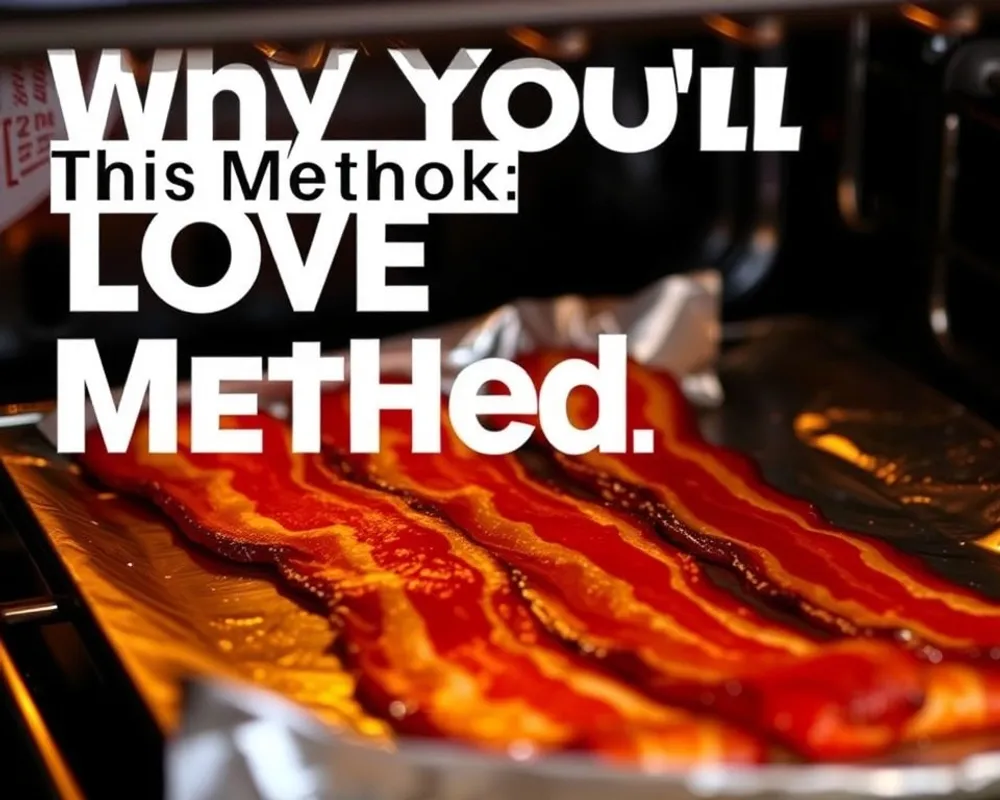
Let's be real. Stovetop bacon works, until it doesn't. Here's why the oven version blows it away:
- Zero mess. No grease splatters on your stove, counters, or arms. The foil catches everything.
- Hands-off cooking. You preheat, lay the strips down, and walk away. No flipping required.
- Perfectly flat strips. No curled-up ends or chewy middle sections. Every piece cooks evenly.
- Batch-friendly. A standard baking sheet fits a full pound of bacon. Try doing that in one skillet.
- Crispy every time. The dry, even heat of the oven renders the fat beautifully. You control exactly how far it goes.
- Easy cleanup. Let the grease cool, ball up the foil, and toss it. The pan barely needs rinsing.
Once you try oven bacon at 400, you'll wonder why you ever dealt with the stovetop hassle.
Ingredients Needed
This is the simplest ingredient list you'll ever see:
- Bacon, regular cut, thick cut, or even turkey bacon. Whatever you've got.
- Optional: Fresh cracked black pepper or light brown sugar for a flavor upgrade
That's it. No oil, no butter, no spray. The bacon renders its own fat, so it cooks in its own goodness.
If you want sweet, caramelized bacon, sprinkle a thin layer of brown sugar over the strips before baking. If you like a little heat, cracked pepper does the trick. But plain, perfectly cooked bacon?
That's already perfection.
What You'll Need
The equipment list is short, and you probably own all of it already:
- Baking sheet, A rimmed half-sheet pan is ideal. The rim catches the grease so it doesn't spill in your oven. I personally use [this Nordic Ware baking sheet (affiliate link)], it's sturdy, doesn't warp at high heat, and cleans up in seconds.
- Aluminum foil, Heavy-duty is best, but regular works. You're lining the pan for easy cleanup.
- Wire cooling rack (optional but recommended), Lifting the bacon off the pan lets the fat drip away and air circulate underneath. That means crispier bacon on both sides.
- Paper towels, For draining after baking.
- Tongs, For transferring hot bacon without dripping grease everywhere.
If you don't have a wire rack, no worries. The bacon still turns out great right on the foil. I'll cover the difference below.
How to Cook Bacon in the Oven — Step by Step
Let's get to the meat of it. Follow these steps exactly, and you'll nail how long to cook bacon in oven on your very first try.
Step 1: Preheat the Oven to 400°F
Set your oven rack to the middle position. You want the bacon centered, not too close to the top or bottom heating element. Preheating is non-negotiable, if you slide the pan into a cold oven, the bacon will start rendering before the heat kicks in, and you'll end up with greasy, limp strips instead of crispy ones.
Give the oven a full 10, 15 minutes to stabilize. Trust me on this.
Step 2: Line Your Baking Sheet with Foil
Tear off a sheet of foil long enough to cover the entire pan with some overhang. Press it into the corners and up the sides. If you're using a wire rack, place it on top of the foil-lined sheet now.
Pro tip: Crumple the foil slightly before smoothing it flat. Those tiny ridges catch the grease and make it less likely to slide around.
Step 3: Lay the Bacon Strips Flat
Arrange the strips in a single layer across the baking sheet or wire rack. Do not overlap, overlapped spots stay soft and pale while the exposed parts burn. Leave a little space between each strip so the hot air can circulate.
If you're using a wire rack, space them evenly across the grates. The rack elevates the bacon so the fat drips down, giving you that all-over crunch.
Step 4: Bake — Regular Cut vs Thick Cut
This is where how to cook bacon in the oven gets precise:
- Regular cut bacon: 15, 18 minutes
- Thick cut bacon: 20, 25 minutes
Pop the pan in and set your timer for the low end of the range. At 15 minutes for regular cut, start checking. Every oven runs a little differently, and bacon thickness varies by brand.
You're looking for the fat to look rendered (translucent and bubbly) and the meat to be deep golden brown.
Step 5: Check for Doneness
Pull the pan out and look. The bacon will continue cooking slightly from residual heat, so pull it when it's one shade lighter than you want. If you want chewy bacon (more like "soft-chewy" rather than "snap"), pull it at the lower end.
If you want bacon that shatters when you bite it, let it go another couple of minutes.
Doneness is personal. There's no wrong answer here, just your preference.
Step 6: Drain and Pat Dry
Use tongs to transfer the bacon to a plate lined with paper towels. Lay the strips in a single layer, then blot the tops with another paper towel. This removes the surface grease and keeps the bacon crisp rather than soggy.
Let it rest for 2, 3 minutes before serving. The strips firm up as they cool.
Tips for Perfect Oven Bacon
These are the small adjustments that separate "good" oven bacon from "I can't stop eating this" oven bacon.
Use cold bacon straight from the fridge. Room-temperature bacon starts rendering too fast and can cook unevenly. Cold bacon gives you a better window for even cooking.
Rotate the pan halfway through. If your oven has hot spots (most do), give the pan a 180-degree turn at the midpoint. This prevents the back edge from getting more done than the front.
Wire rack vs. no rack, the honest truth. A wire rack produces bacon that's crispier on both sides because the fat drips away and air flows underneath. But it also means more cleanup (washing the rack). Bacon cooked directly on foil gets a slightly softer underside but is still perfectly crisp on top. For most home cooks, foil-only is totally fine. For special brunches or "I want restaurant-quality bacon," break out the rack.
Save the rendered fat. Don't dump that liquid gold down the drain. Let it cool slightly, then pour it through a fine-mesh strainer into a jar. Store it in the fridge and use it for roasting potatoes, sautéing greens, or making cornbread.
It keeps for weeks.
How to Cook Bacon in Oven at Different Temperatures
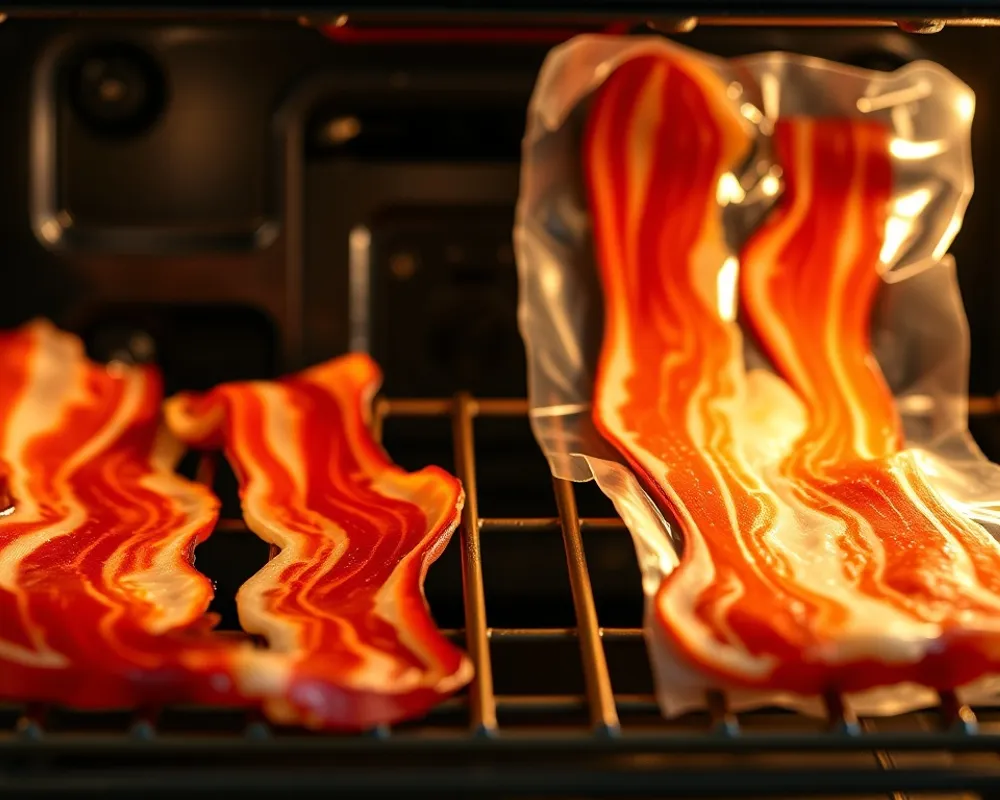
Four hundred degrees is my sweet spot, it's fast enough to be convenient but gentle enough to render the fat fully without burning. But sometimes you need to work around what else is in the oven. Here's how the temps stack up:
375°F — Slow and Gentle
- Regular cut: 18, 22 minutes
- Thick cut: 25, 30 minutes
Lower heat means more fat renders out before the meat crisps. This gives you bacon that's extra lean and evenly cooked. Great if you want it more "meaty" than "crispy." It also gives you a wider window, so there's less risk of burning.
400°F — The Gold Standard
- Regular cut: 15, 18 minutes
- Thick cut: 20, 25 minutes
This is what I use 90% of the time. The bacon comes out perfectly crisp with good fat rendering. It's hot enough to be efficient but not so hot that the sugar in brown sugar bacon burns.
425°F — Fast and Furious
- Regular cut: 12, 15 minutes
- Thick cut: 16, 20 minutes
This works well if you're in a hurry or you want super-snappy bacon. But watch it closely, the difference between perfect and burnt is about 60 seconds at this temperature. I recommend using the wire rack at 425°F so the bacon doesn't sit in its own grease and fry.
My advice: Stick with oven bacon at 400 until you're comfortable, then experiment up or down.
Regular Cut vs Thick Cut Bacon — Time Difference
Let's be specific here because how long to cook bacon in oven depends heavily on thickness.
| Cut Type | Thickness | 400°F Bake Time | Best For |
|---|---|---|---|
| Regular | ~1/16 inch | 15–18 min | Everyday breakfast, sandwiches, salads |
| Thick | ~1/8 inch | 20–25 min | Burgers, BLTs, eating as a "main" |
| Center-cut | ~1/16 inch | 12–15 min | Lower fat, quicker cook |
Regular cut cooks faster and gets crispier overall. The thin strips curl less on a wire rack, but they can burn quickly if you walk away.
Thick cut needs that extra time because there's more meat to cook through. The fat takes longer to render. Thick cut is also more forgiving, if you overshoot by a minute or two, it's still delicious rather than charcoal.
Visual cue for both: You're looking for the fat to turn from white and opaque to translucent and golden. The meat part should go from pink to deep reddish-brown. When you see that color, start checking every 60 seconds.
How to Store Leftover Bacon
If you somehow have leftovers, here's how to keep them good:
In the fridge: Let the bacon cool completely. Stack it between layers of paper towels in an airtight container. It stays crisp for 4, 5 days.
If it softens, pop it in a 350°F oven for 3, 4 minutes to re-crisp.
In the freezer: Lay cooled strips on a parchment-lined baking sheet and freeze until solid (about 1 hour). Transfer to a freezer bag. Frozen bacon keeps for 2, 3 months.
Reheat straight from frozen at 350°F for 5, 6 minutes.
Crushed bacon bits: Crumble any less-than-perfect strips into a jar. Keep them in the fridge for sprinkling on salads, baked potatoes, or pasta. This is my go-to move, those imperfect end pieces become salad toppings.
What to Serve With Oven Bacon
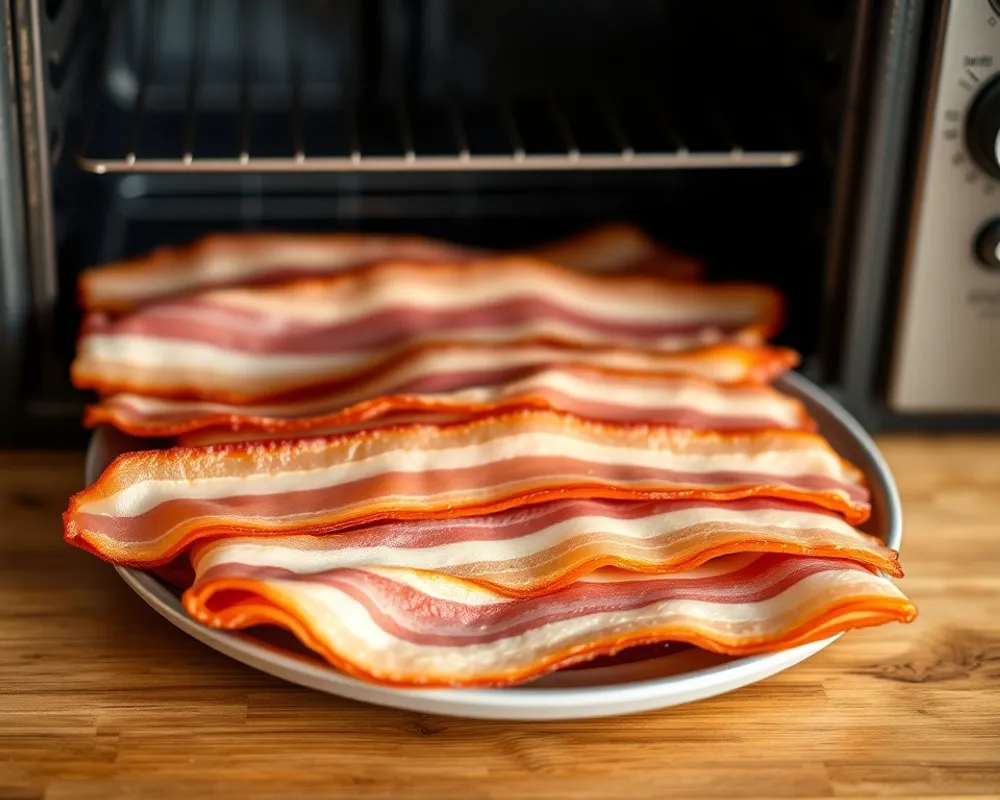
Oven bacon is a side dish champion. It pairs beautifully with classic breakfast foods, but don't stop there.
Breakfast: Serve it alongside scrambled eggs, pancakes, or French toast. If you're making a big weekend spread, this bacon method frees up your stovetop for the eggs and hash browns.
Burgers and sandwiches: Crunchy bacon takes any sandwich to the next level. Try it on a classic BLT or crumbled over a loaded burger.
Salads: Warm bacon bits over a spinach salad with hard-boiled eggs and vinaigrette. Ridiculously good.
Soups and chowders: Crumble it on top of baked potato soup or corn chowder for a salty crunch.
Pasta: Toss crumbled bacon with carbonara, Alfredo, or even simple buttered noodles. Instant upgrade.
Need more ideas? Check out our air fryer bacon recipe for a different spin on crispy strips. Or if you're planning a full breakfast spread, our guide on cooking frozen chicken breast in the air fryer makes a great protein-packed addition to any meal.
Frequently Asked Questions
Do you need to flip bacon in the oven?
Nope. That's the beauty of this method. The hot air circulates around the bacon, cooking both sides evenly.
If you're using a wire rack, air flows underneath naturally. Even on foil, the bacon cooks through without flipping. Save yourself the extra step.
What temp is best for oven bacon?
400°F is the sweet spot. It's hot enough to render fat quickly and crisp the meat, but not so hot that the bacon burns before it's done. That said, 375°F works for slower cooking (less risk of burning), and 425°F works for a faster, snappier result. If you're asking me what to use for your first time? 400°F, every time.
Can you cook bacon on a wire rack?
Absolutely. In fact, I recommend it. A wire rack lifts the bacon above the rendered fat, so the strips cook from all sides rather than sitting in a pool of grease. The result is bacon that's crispy across the entire surface, not just on top. The only downside is cleaning the rack, but a quick soak in hot, soapy water handles that.
How do you keep bacon from splattering?
Bacon doesn't splatter in the oven. That's the whole point. On the stovetop, the moisture in the cold bacon hits the hot pan and explodes grease everywhere.
In the oven, the heat is dry and even, so the fat renders quietly into the pan. No splatter, no mess, no burned forearms.
Can I cook bacon in the oven without foil?
You can, but you'll regret the cleanup. The grease bakes onto the pan and turns into a stubborn, sticky residue. Foil makes cleanup a 10-second job.
If you're out of foil, use parchment paper, it's not quite as durable, but it works in a pinch.
Why is my oven bacon chewy instead of crispy?
Two possible reasons: either you undercooked it, or the strips were overlapping. Overlapping traps steam, which prevents the edges from crisping. If the bacon is fully cooked but still chewy, give it 2, 3 more minutes next time.
You can also try the wire rack method for better air circulation.
Can I cook a whole pound at once?
Yes. A standard half-sheet pan fits about 12 regular-cut strips comfortably. That's roughly a pound.
Space them out in a single layer, if they don't all fit, use two pans and swap the racks halfway through.
Recipe Card
Oven Baked Bacon
Prep time: 2 minutes
Cook time: 15, 25 minutes (depending on thickness)
Total time: 20, 30 minutes
Servings: Varies (about 12 strips per pound)
Ingredients
- 1 lb bacon (regular or thick cut)
- Optional: black pepper or brown sugar
Instructions
- Preheat your oven to 400°F. Position the rack in the middle.
- Line a rimmed baking sheet with aluminum foil. For extra-crispy bacon, place a wire cooling rack on top of the foil.
- Arrange the bacon strips in a single layer, not touching or overlapping.
- Bake for 15, 18 minutes (regular cut) or 20, 25 minutes (thick cut). Start checking at the low end of the range.
- Remove when the bacon is one shade lighter than your desired doneness, it continues cooking from residual heat.
- Transfer to a paper-towel-lined plate. Blot the tops gently.
- Rest for 2, 3 minutes before serving.
Storage: Keep in an airtight container in the fridge for up to 5 days, or freeze for up to 3 months.
There you have it. How to cook bacon in the oven, simple, repeatable, and completely foolproof. No splatter, no hovering, no uneven strips. Just perfect bacon, every single time.
Try it once, and I promise you'll never go back to the stovetop.